Tag Archives: organic

Here’s To Making It

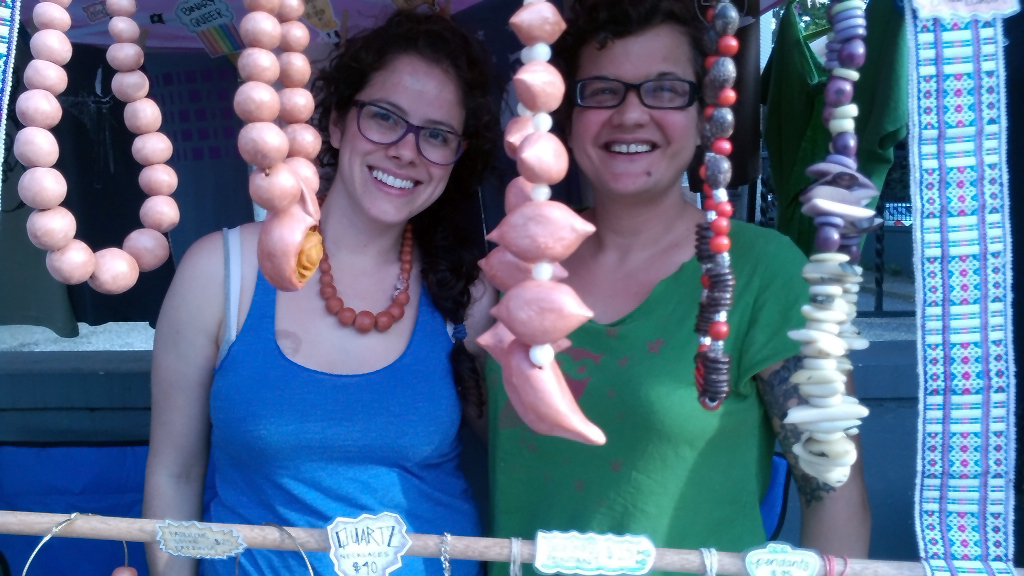
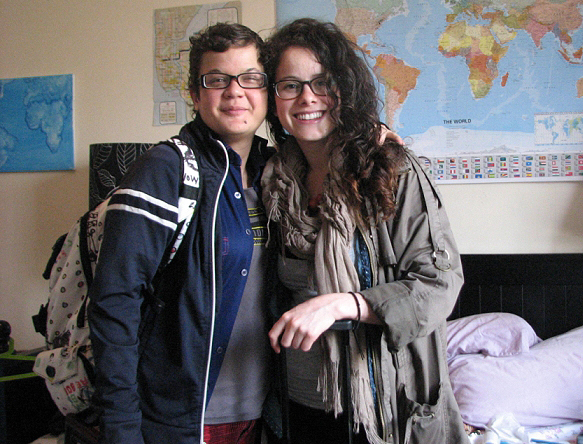
Maria Emilia and Cara Elaine

What you want to spread the word about out amazing, magical shop of art? No problem, here is a blurb that you may post away on your Facebook if you so choose…

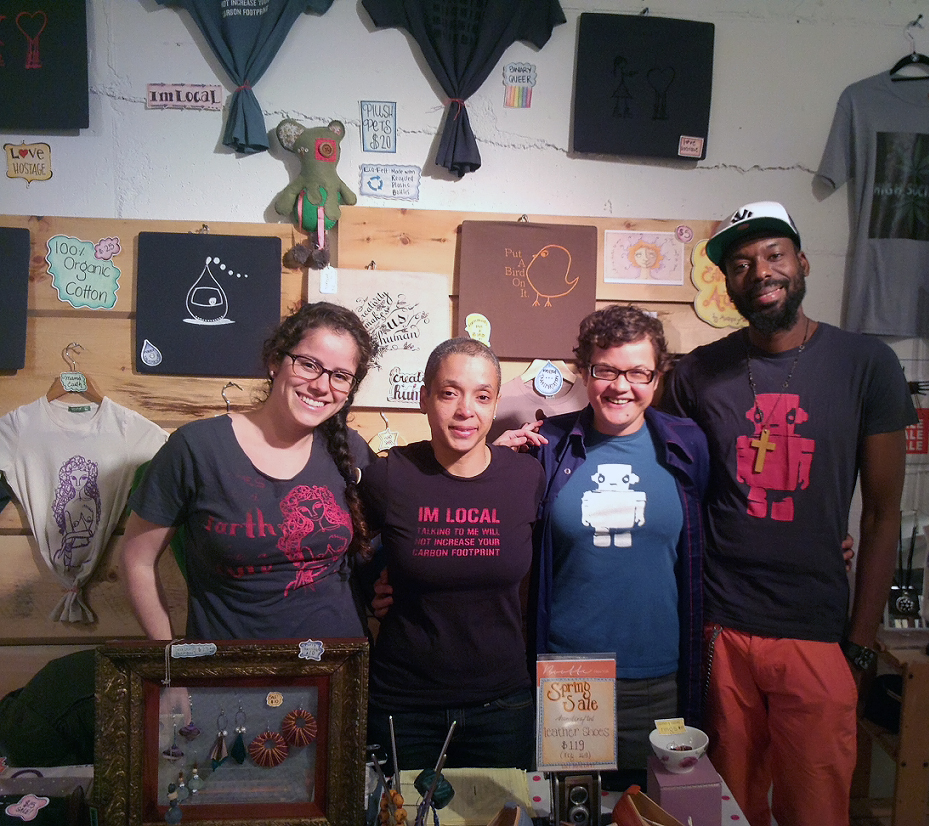
Mushpa y Mensa, is a small eco-boutique that moves around the city’s outdoor (& at times indoor) markets, advocating for local, eco-conscious, women-owned, queer-owned, small businesses all over the world, and of course to spread our art, messages, laughter, & love! We (Cara Elaine (Mushpa) and Maria Emilia (Mensa)) hope people see we love what we’re doing (making a living selling our art), and get inspired to make small changes in their lives. Small moments become large movements.  Mushpa y Mensa is a small team with really big dreams.

Come check out our cute shop here: www.mushpamensa.com

Wanna tweet some love as well? We’ve written something for you…

Small moments become large movements. Mushpa y Mensa is a small team with really big dreams. Come check us out http://www.mushpamensa.com

No, but seriously thanks to everyone that has supported us over these last few months. To family, friends and the multitudes of strangers we’ve met and not one of them we haven’t genuinely liked. People who have really made us feel good about our decision to do something different, doing what we love for a living.

Here’s to making it.

– Mushpa y Mensa

Happy Photoshootin’

A nice afternoon, two cold and delicious ginger lemon cocktails, a bright colored wall, some nice shirts and your everyday fire escape was all we needed for an amazing photo-shoot.

easy photoshoot

To make something beautiful pop even more, I really feel like you only need a couple of essential things. And that’s all we used:

 Amazing light, music, and a nice camera…

easy photoshoot

Here’s a sneak peak to our latest photo-shoot….

easy photoshoot

cute….

easy photoshoot

boom!
-Mensa

Pridefest

Bohemian Hall Beer Garden
Working the Bohemian Hall Beer Garden is the Good Life.

We applied for Pridefest today. They asked us 2 questions, we have them below to check out if you’d like. It may help you get a better idea of who we are and how we think. Enjoy…

What are your group’s major accomplishments?

i.e., are you the longest running, oldest, largest of any kind?

A major accomplishment, well starting a business in January of this year for one. Secondly, people really loving our raw attempt at different types of art forms than we’re used to working with. Maria Emilia, being more of a painter, sculptor and I, a film major who fixes computers and builds websites. Nevertheless, people love our jewelry, which we design from a force beyond our own brains into our capable hands, magic felt dolls made out of recycled plastic bottles, 100% organic cotton tees with fantastical original designs like Binary Queer, which is Queer spelled out in binary code (check it out here http://www.etsy.com/listing/150007505/binary-queer-organic-cotton-t) and whatever else our maniacal minds may come up with. We didn’t really think of the selling part so much, but jumped right in after opening our Etsy store, www.mushpamensa.com. Markets we have done thus far are, The Market NYC, Fulton Flea, Astoria Market and we are doing Saint Anthony’s Market over on Sullivan and Houston this weekend. Maria Emilia and I really like being mobile. We also like meeting the people who buy our art. We tend to strike up conversations about their career choices, life choices, they laugh, relate, appreciate our shirts and generally are really good, interesting people themselves. These good people are drawn to our stuff (and us). That gives us hope in humanity. It sounds dramatic, but riding the New York City subway during rush hour, well that changes a person, people are at their worst then. People on a Saturday or Sunday walking in the sun, well they’re alright.

Give us a brief description of your main goals, functions, and/or mission.

PART 2

We are a small eco-boutique that moves around the city’s outdoor (and at times indoor) markets, advocating for local, eco-conscious, women-owned, queer-owned, small businesses all over the world, and of course also to sell and spread our art, messages, laughter, love, et cetera! We hope people see we love what we are doing (which is making a living selling our art), and get inspired to make small changes in their lives. Small moments become large movements. It’s true. Mushpa y Mensa is a small team with really big dreams.

Come check us out tomorrow at St. Anthony’s Market in the city from 10-8PM.

See you then!

– Mushpa

Art in Action.

Remember in science class we would do random experiments that would ultimately teach us something about our elemental world. Salt crystals, freezing flowers with liquid nitrogen and then shattering them, testing liquids and forming chemical reactions? Well, quite accidentally we did an experiment when dying a shirt this week and it was totally cool!

tumeric dye fabric

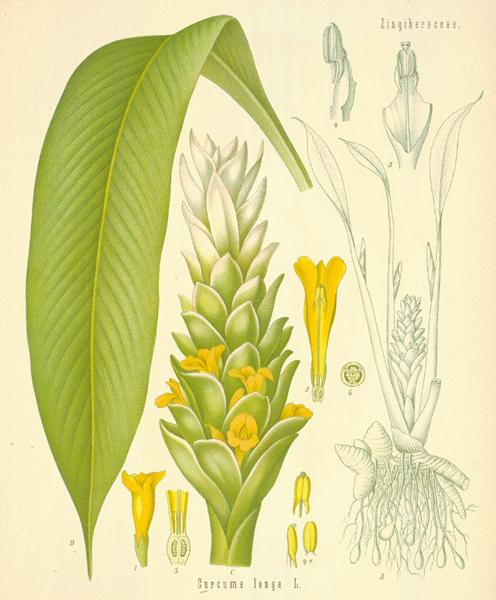
We dyed a batch of shirts with organic turmeric. Note that this was our first time using this specific natural dye for cotton fabrics. Pretty straight forward dying technique. Hot water + a good amount of turmeric + a natural mordant, like salt, y listo, we had yellow shirts.  We rinsed them with water until no more dye came out, like three times. Perfect!

Then we wanted to double test the fabric so we warmed up some water with soap,  dipped the shirts in the water….and…sayyy whaaaaaaaat? The water and shirts immediately turned red!!!! We had no idea what had just happened. Magic!?!? : ) It brought us back to doing those experiments in science class.

After a quick research we found out the following

“Turmeric has a pigment known as xanthophylls, which lends the yellow color to it. It also has a pigment called as carotene, which is reddish orange in color. When turmeric comes in contact with detergent, it reacts with the fatty acids present in the detergent and hence the carotene pigment gets more active than the xanthophylls and turmeric turns red. When turmeric is combined with any base liquid like soap it turns red in color while when turmeric comes in contact with any substance like that of vinegar, that is acidic in nature, it turns yellow.”

tumeric dye fabric

We had no idea, so for those of you who have bought our amazing turmeric shirts I would say make sure you wash them by hand, separately, just in case of any bleeding.

On to future discoveries.

– Mushpa y Mensa

p.s. – Come check out these amazing turmeric shirts today at The Fulton Flea (located at 650 Fulton Street between Fort Greene Place and South Elliott Place (near the intersection of Lafayette Avenue) in Brooklyn, NY.). We will be there from noon to 8PM. The market is right next to BAM (Brooklyn Academy of Music) http://www.bam.org/, Brooklyn Botanical Gardens http://www.bbg.org/, the Brooklyn Public Library http://www.bklynpubliclibrary.org/, good food and many other amazing Brooklyn sites! Make it a great day.

Introducing Our White on Ocean Line

White on Ocean

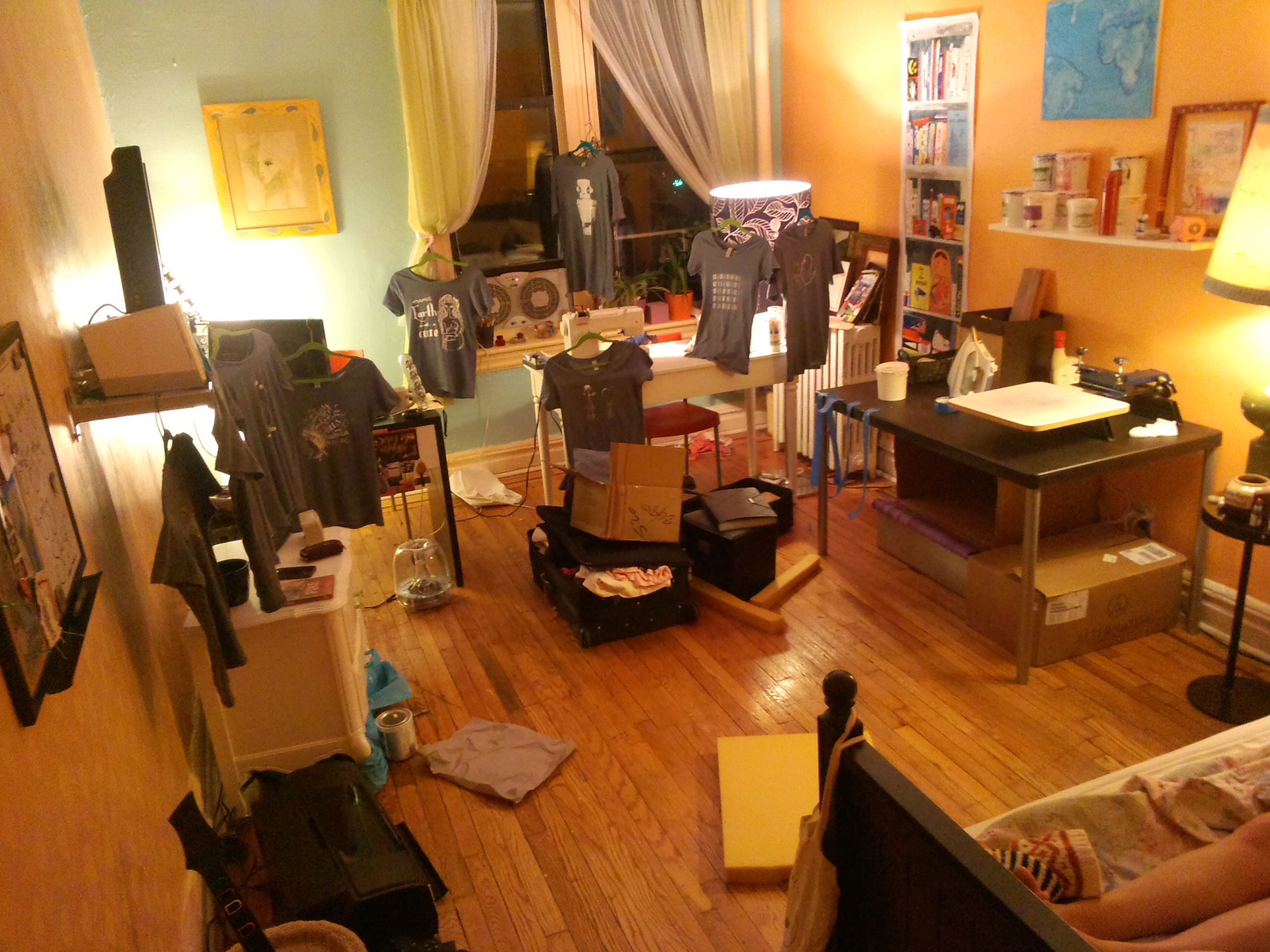
We here at Mushpa y Mensa have been working hard to get new products out there for our people. Last week I decided to print all 10 of our designs using the white 301 ECO-Series by Matsui (which is an amazing, eco-friendly ink we use on all our shirts) on ocean colored scoop and crew organic cotton Alternative Apparel shirts.

White on Ocean Line
Working Hard in the Studio

You all wanted more white on ocean, well now you have it in every flavor!!!

Silk Screens
Our Silk Screens Drying

Hit up our shop to order your very own organic, original, hand printed white on ocean fantastical shirt (or any of our other gorgeously designed shirts, jewelry, stuffed animals, etc). You’ll be helping two amazing ladies trying to make a difference while making a living doing what we love. That’s not so bad. :]

Much love to all!

– Mushpa

“Queen of The Sun: What are Bees Telling Us?”

queen of the sun

In the fall of 2006, newspapers around the United States began to publicize a unnerving phenomenon. Honeybees were a mysteriously disappearing from beehives all around the nation. Dave Hackenburg, a outspoken beekeeper, and the first to raise a stir about the crisis, reported that bees were simply vanishing from his hives. That fall, beekeepers and commercial beekeeping enterprises around the country reported losses of 30% with some beekeepers reporting losses up to 90% of all of their colonies.

I want to post a quick review about this wonderful documentary, Queen of the Sun: What are Bees Telling Us?, and just an overall shout out to the hard workers who keep us fed and alive…The Bees in our world!

It is incredible how much I learned yesterday watching this, and it’s also a bit chilling to know that these little animals are at incredible risk of disappearing from this earth, and even more daunting, our system of agriculture disappearing with them. Meaning, we are at risk as well. Our whole ecosystem actually!

2439460646_e9fe39207f_o

From how bees choose their beekeepers, to laws banning communities from bee-keeping, to the mass production and mass destruction of honey and bees, this film really shines a light on these little workers that pollinate and do so much for us. Of course, it forms a full circle and goes back to the root of many of our agricultural conundrums in our world: Massive industrial agriculture and factory farming and how it is destroying our world. Can you believe that factory farmers actually feed CORN SYRUP to the producers of honey!?!?!  I found this disgusting, outrageous, and it hurt me so much.

So what to do to help bees? The producers, filmmakers and beekeepers that put together this film have given us helpful things that we can do to keep this beautiful little creatures in our world today. So let’s get started!

queen of the bees 

 1. PLANT BEE FRIENDLY FLOWERS AND FLOWERING HERBS IN YOUR BACKYARD  

Bees are losing habitat all around the world due to intensive monoculture-based farming practices, pristine green (but flower-barren) sprawling suburban lawns and from the destruction of native landscapes. Just planting flowers in your garden, yard, or in a planter will help provide bees with forage. Avoid chemically treating your flowers as chemicals can leach into pollen and negatively affect the bees systems. Plant plenty of the same type of bloom together, bees like volume of forage (a sq. yard is a good estimate).

Here are a few examples of good plant varieties: Spring – lilacs, penstemon, lavender, sage, verbena, and wisteria. Summer – Mint, cosmos, squash, tomatoes, pumpkins, sunflowers, oregano, rosemary, poppies, black-eyed Susan, passion flower vine, honeysuckle. Fall – Fuschia, mint, bush sunflower, sage, verbena, toadflax. For a great list of plants honeybees love click here

——-

2. WEEDS CAN BE A GOOD THING

Contrary to popular belief, a lawn full of clover and dandelions is not just a good thing—it’s a great thing! A haven for honeybees (and other native pollinators too). Don’t be so nervous about letting your lawn live a little. Wildflowers, many of which we might classify as weeds, are some of the most important food sources for native North American bees. If some of these are “weeds” you chose to get rid of (say you want to pull out that blackberry bush that’s taking over), let it bloom first for the bees and then before it goes to seed, pull it out or trim it back!

 ——-

3. DON’T USE CHEMICALS OR PESTICIDES TO TREAT YOUR GARDEN 

Yes, they make your lawn look pristine and pretty, but they’re actually doing the opposite to the life in your biosphere. The chemicals and pest treatments you put on your lawn and garden can cause damange to the honeybees systems. These treatments are especially damaging if applied while the flowers are in bloom as they will get into the pollen and nectar and be taken back to the bee hive where they also get into the honey—which in turn means they can get into us. Pesticides, specifically neo-nicotinoid varieties have been one of the major culprits in Colony Collapse Disorder.

——-

4. BUY LOCAL, RAW HONEY

The honey you buy directly sends a message to beekeepers about how they should keep their bees. For this reason, and for your own personal health, strive to buy local, raw honey that is from hives that are not treated by chemicals. It can be hard to find out what is truly “local” and truly “raw”–and even harder yet to find out what is untreated. Here’s a few guidelines: If you find it in the grocery store and it’s imported from China, don’t buy it. There have been a number of cases recently of chemically contaminated honey coming from China. If it’s coming from the grocery store, but it doesn’t say the words “pure” or “raw” and you can’t read in the description that it’s untreated by chemicals, don’t buy it. If it’s untreated, the label will say, as this is an important selling point. We recommend a simple solution for most people. Go to your farmer’s market and shake hands with the beekeepers you meet. There are beekeepers at nearly every farmer’s market selling their honey and other products. Have a conversation with them, find out what they are doing to their hives, and how they are keeping their bees. If they are thoughtful, respectful beekeepers who keep their bees in a sustainable, natural way, then make a new friend and support them!

——-

5. BEES ARE THIRSTY. PUT A SMALL BASIN OF WATER OUTSIDE YOUR HOME

You may not have known this one—but it’s easy and it’s true! If you have a lot of bees starting to come to your new garden of native plants, wildflowers and flowering herbs, put a little water basin out (a bird bath with some stones in it for them to crawl on does a nice trick). They will appreciate it!

——- 

6.BUY LOCAL, ORGANIC FOOD FROM A FARMER THAT YOU KNOW

What’s true for honey generally holds true for the rest of our food. Buying local means eating seasonally as well, and buying local from a farmer that you know means you know if that food is coming from a monoculture or not. This is much easier in the summer when you can get your fresh produce from a local farmer’s market. Another option is to get your food from a local CSA (Community Supported Agriculture) Farm. Keep in mind, USDA Organic Certification can be expensive and you may find many great farmers and beekeepers with excellent food and honey that isn’t USDA certified simply because they don’t produce a high quantity or opt for the expense of certification. Don’t let this get in the way of supporting them and if you’re worried about their products—have a conversation with them.  (Note – A huge challenge for beekeepers is to keep their bees in an area where there is no chemical spray within 3 miles, as this is really what is required to guarantee truly organic honey. All the more reason for us all to avoid the use of harsh chemicals.)

——- 

7. LEARN HOW TO BE A BEEKEEPER WITH SUSTAINABLE PRACTICES

Look up a local bee association that offers classes with natural approaches in your community and link up. Visit our resources & links page to start reading and exploring first steps!

——-

8. UNDERSTAND THAT HONEYBEES AREN’T OUT TO GET YOU

Honeybees are vegetarians. They want to forage pollen and nectar from flowers up to three miles from their hive and bring that food back to provide food for themselves and the beehive. Contrary to what the media might have us believe, they are not out to sting us. Here are a few tips to avoid getting stung. 1. Stay still and calm if a bee is around you or lands on you. Many bees will land on you and sniff you out. They can smell the pheromones that come with fear and anger it can be a trigger for them to sting you. 2. Don’t stand in front of a hive opening, or a pathway to a concentration of flowers. Bees are busy running back and forth from the hive, and if you don’t get in their way, they won’t be in yours. 3. Learn to differentiate between honeybees and wasps. Honeybees die after they sting humans (but not after they sting other bees!), wasps do not. Wasps are carnivores, so they like your lunch-meats and soda. Honeybees are vegetarians. For a quick lesson on their differences click here.

——-

 9. SHARE SOLUTIONS WITH OTHERS IN YOUR COMMUNITY 

There are so many fun ways to help and be a voice for the bees. Share about the importance of bees at local community meetings, at conferences, in schools and universities, and on on-line message boards and forums. Let them know about QUEEN OF THE SUN and other great media out there that is in support of the honeybee.

Invite your friends and family to attend a screening of QUEEN OF THE SUN in your area. Find screening locations. – (You can also see it on Netflix “Watch it Now”.) Be part of our Community Screening Campaign by hosting a house-party or larger screening in your area! Click here to learn more.-If you are part of an educational institution, ask your institution to purchase an Educational DVD of QUEEN OF THE SUN (available HERE)

 queen of the sun
Let’s Bee Bee-utiful!
: D
– Mensa
Markets, Markets and More Markets

Maria Emilia Borja y Cara Reynolds

We here at Mushpa y Mensa have been working the last few weekends at The Market NYC. It was a great few weeks, but now that the weather is getting nicer we have decided it is time to hit up the outdoor markets. We applied to a few other venues this week for this weekend and the next few throughout the summer. Once they get back to us we will let you know. If you have any ideas or suggestions where you would like us to sell, feel free to comment away. This is our first few months of business and our first experience at markets so let us know. Also, any insider tips from other vendors are welcome as well.

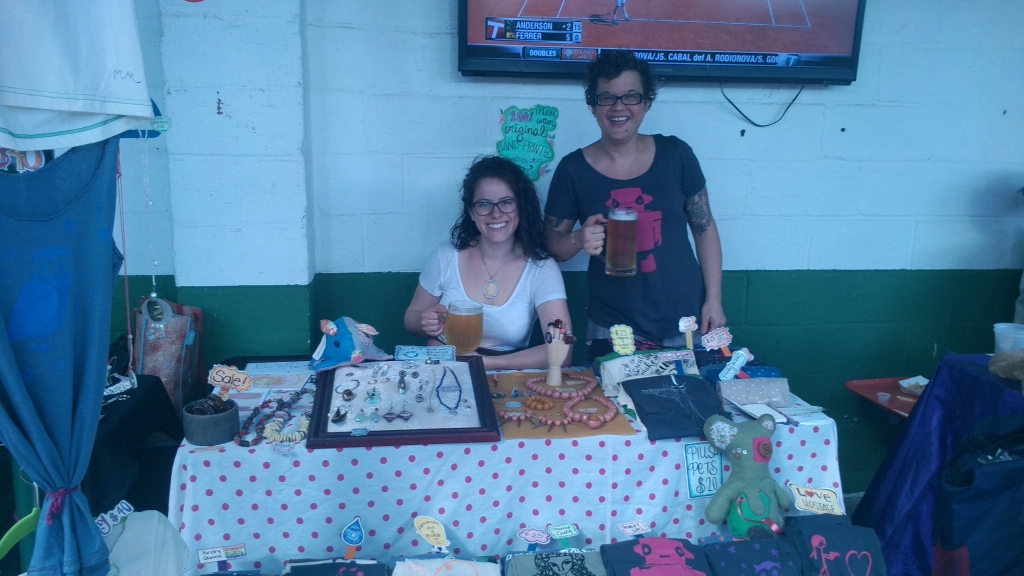
One upcoming market you can come and chill with us at is Astoria Market in Queens. It will be in the garden at Bohemian Hall (aka outdoor beer garden) on June 2nd from 1-6PM. What does that mean???? It means come, drink, be merry, buy awesome, organic, original, hand printed, fantabulous t-shirts in the sun!!!! That sounds awesome!

Thanks to everyone for their support and love these last few months. We appreciate it.

Besos,

Mushpa

Happy Mother’s Day or Sunday!!!

Mushpa y Mensa

We here at Mushpa y Mensa wanted to wish everyone in the know and unknown universes a Happy Mother’s Day!!! We hope it is filled with much love and fantabulous brunches. If you don’t fall under the Mother’s Day umbrella then we wish you an amazing Sunday of fantastical brunches. You’re welcome. :]

We honor our Mothers and our dear Mother Earth at Mushpa y Mensa with our “No More Stitches, Mama Earth Needs a Cure” shirt. You may pick one (or a fafillion) up for you, your mom, your mom’s mom, or anyone really since it is about honoring Mama Earth today at The Market NYC (159 Bleecker Street) from 12pm-8pm!!!

In other news, Mushpa y Mensa got a shout out this week by Jeffrey Hartinger of Generation: (WH)Y?. Check out the story here.

Alright, I think that is enough exciting news for now. We hope you have enjoyed it as much as we have.

– La Mushpa y La Mensa

Be sure to check us out at….

Mushpa y Mensa Website – http://www.mushpamensa.com
Mushpa y Mensa Pinterest – http://pinterest.com/musphamensa/mushpa-y-mensa
Mushpa y Mensa Twitter – https://twitter.com/mushpamensa
Mushpa y Mensa Tumblr – http://mushpamensa.tumblr.com

Once Again Back It’s The Incredible…

Mushpa y Mensa

That’s right catch us next Friday (5/10) 12-9, Saturday (5/11) 11-9, and Sunday (5/12) 12-8 living the high life at The Market NYC. You can pick up some of our super fly 100% handmade, organic tee shirts, imaginary friends and of course our amazing jewelry.

See you there.

-Mushpa

Come See Us On Sunday

Maria Emilia Borja and Cara Reynolds

What only one day left to catch us at The Market NYC (159 Bleecker Street)? You still have time! Mushpa y Mensa will be there from 12pm-8pm tomorrow live and uncut.  If you live in the city or are visiting, make sure to stop by and show us some love.

-Mushpa